
If you have ever sat in a pediatric dental waiting room while your child was back in the exam room without you, you know the particular discomfort of that situation. You want to be there. Your child might be nervous. You do not know exactly what is happening. And the reason you were asked to wait — if you were given one at all — may not have fully satisfied you in the moment.
The explanation, when it is given well, usually surprises parents. Because the reason a pediatric dentist might ask you to step out is not about safety concerns or distrust. It is about decades of research showing that many children cooperate significantly better during dental procedures when their parents are not watching — not because of anything wrong with the parent, but because of something fundamental about how children’s nervous systems work in the presence of the people they love most.
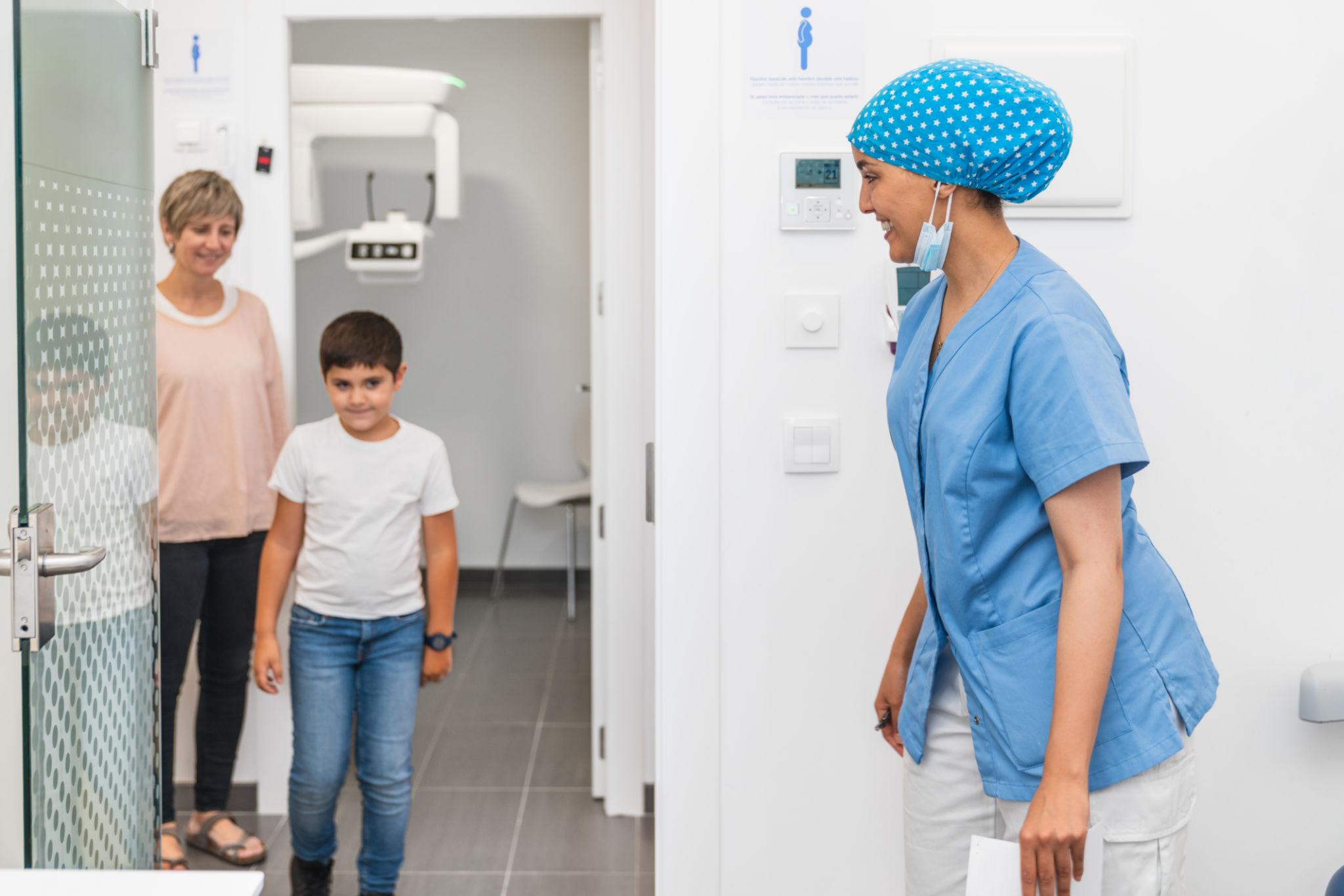
What Behavioral Guidance Actually Is
Behavioral guidance is a formal, evidence-based framework that pediatric dentists use to help children have successful dental visits. The American Academy of Pediatric Dentistry publishes detailed clinical guidelines on it, and board-certified pediatric dentists spend two or more years of specialized training beyond dental school learning how to apply it. It is not a collection of tricks for keeping kids still. It is a recognized clinical approach to managing anxiety, building trust, and producing outcomes — successful treatment, reduced dental phobia, positive long-term attitudes toward dental care — that brushing through an appointment without it cannot reliably achieve.
The toolkit includes a range of techniques selected based on the individual child. Tell-show-do: explaining each step in child-friendly language, demonstrating it on a model or a finger, then performing it. Voice control: calm, confident tones that communicate authority without threat. Positive reinforcement. Distraction — ceiling-mounted screens, music, conversation. Gradual desensitization for very anxious children over several visits. Nitrous oxide for mild anxiety. Deeper sedation when the situation genuinely calls for it. And parental presence or absence, used deliberately based on what the child needs.
That last item is the one parents most frequently encounter and least frequently understand. Parental presence is not inherently better or worse than parental absence during a dental procedure. It is one variable in a clinical decision that is made for each child individually.
The Part That Surprises Most Parents
Pediatric researchers have observed consistently over decades that many children behave differently in their parents’ presence versus their absence during medical and dental procedures. The pattern that shows up most often is not what parents expect. Children frequently become more emotional with a parent watching. They look to the parent for signals about how scared they should be. They sometimes “perform” their distress more dramatically, not out of manipulation, but because the presence of the attachment figure activates a different set of behavioral responses than being on their own with a friendly stranger. And anxious parental body language — a tense face, a worried expression, a sharp intake of breath when an instrument appears — is read and amplified by the child in real time.
None of this is the parent’s fault. It is just how children’s nervous systems are wired. The same child who cried throughout an appointment with a parent present will sometimes report afterward that the visit was “fine” or “kind of fun” when separated. Parents find this disorienting, but the research on it is consistent.
The clinical situations where separation tends to be most beneficial: an anxious child whose anxiety escalates rather than settles when the parent is in the room; procedures requiring high cooperation, like fillings or extractions; cases where the dentist needs to establish an independent rapport with the child; older children who are developmentally ready to handle the appointment on their own; and situations where the parent is visibly anxious and the child is reading it. In those contexts, the separation is not about excluding the parent. It is about giving the child the best chance of a low-stress, successful visit.
When Parents Are Absolutely Welcome
Parental separation is a specific clinical tool used in specific situations. It is not a philosophy of keeping parents out. At Dino Kids Dental, parents are present during most appointments — initial consultations, routine exams and cleanings, fluoride and sealant applications, treatment planning conversations, and any visit where the child is clearly more comfortable with a parent nearby. Children under three, children with special needs, and children experiencing a dental emergency where parental support is essential are situations where parental presence is not just welcome but clinically important.
The distinction is not routine versus restorative. It is a case-by-case clinical judgment. A six-year-old getting a filling who has been to the office four times, knows the team, is developmentally ready to handle the appointment independently, and whose mother is visibly stressed in the chair next to her — that child might genuinely benefit from some private time with the dentist. A five-year-old getting the same procedure who has significant anxiety and whose father’s calm, steady presence is clearly grounding him — that child should have his father in the room. Neither answer is universal. Both require a dentist who is paying attention to the individual child.
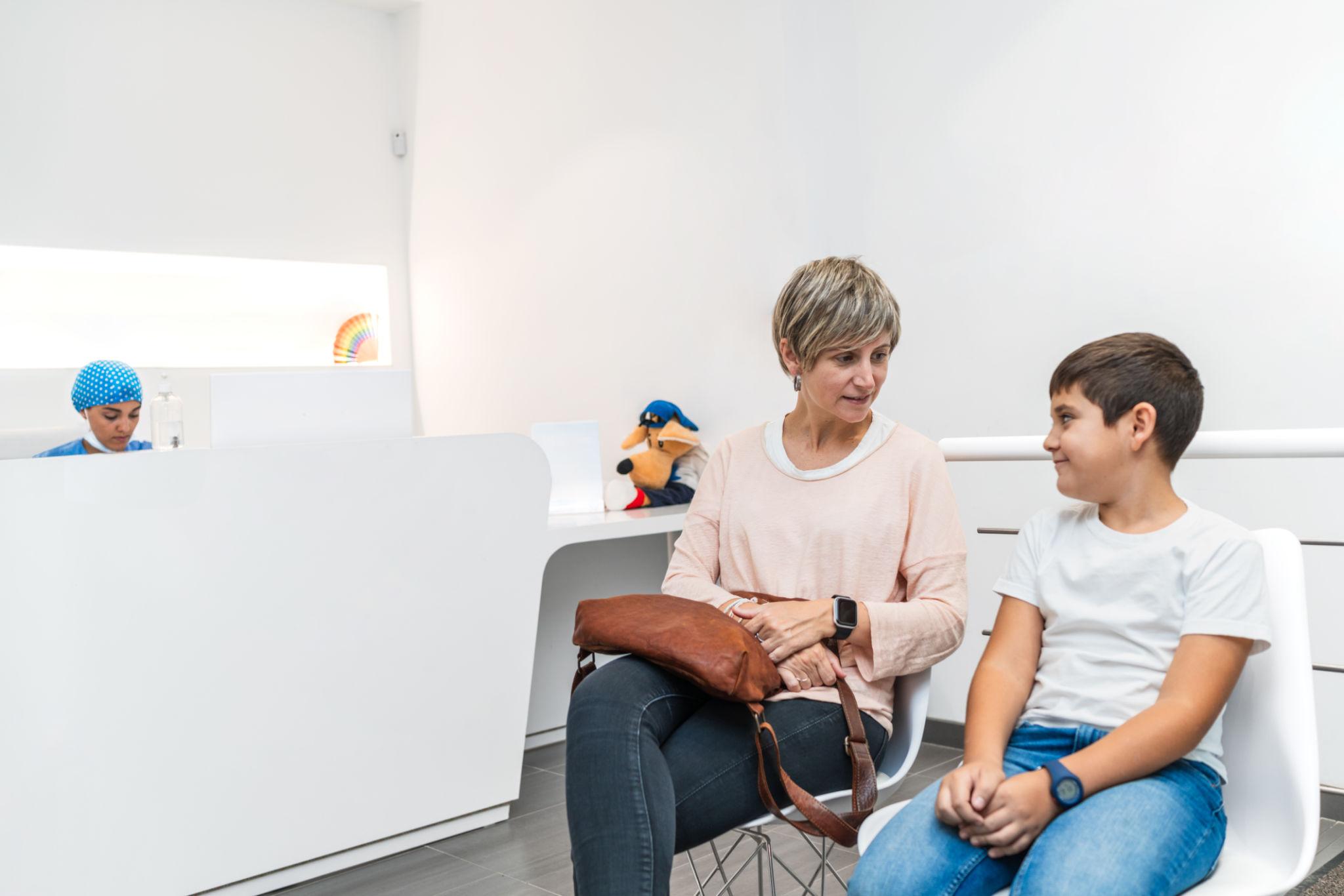
What to Ask and What to Look For
The way a pediatric dental practice handles the question of parental presence tells you a great deal about how they operate overall. A practice that handles it well explains their reasoning without being asked, invites your questions without defensiveness, adapts based on your child specifically, and gives you a thorough debrief after any appointment where you waited in the lobby. They welcome you to be present if you feel strongly about it, except in the narrow set of circumstances — usually sedation procedures with specific safety protocols — where there are genuine clinical reasons for limitation, and even those they explain clearly in advance.
Practices that handle it poorly refuse to explain their reasoning, become defensive when parents ask questions, apply blanket rules without individual assessment, or use outdated physical restraint techniques without informed consent. These are not just signs of a bad approach to parent-separation. They are signs of a practice that is not operating with genuine family-centered care as a priority.
The questions worth asking any pediatric dental practice: What is your approach to having parents in the exam room? How do you handle an anxious child? How will you communicate with me during the appointment if I am in the lobby? What happens if my child becomes distressed? Can I be present if I would really prefer to be? A practice that welcomes these questions without a flicker of impatience is one worth trusting.
What You Can Do Before, During, and After the Visit
Whether or not you are in the exam room, the work you do as a parent shapes your child’s dental experience more than most parents realize. In the days before an appointment, the language you use matters considerably. Talking about the visit casually, in neutral or positive terms, is very different from building it up as a significant event — which tips some children toward anxiety even when the procedure itself is minor. Avoiding words that carry physical threat — hurt, shot, pain — and instead using the language the dental team uses matters too. If you have your own history of dental anxiety or bad experiences, keeping those out of your preparatory conversations is one of the most protective things you can do for your child.
If you are waiting in the lobby during a procedure, the most useful thing you can do for your child is stay calm. Children who emerge from an appointment and find a parent who is visibly worried often recalibrate their own experience of the visit based on that reaction. “Were you scared?” and “Did it hurt?” as opening questions can implant anxiety about something the child experienced neutrally. “How did it go?” and letting the team brief you first tends to go better for everyone.
After the visit, what you do in the following days matters for the next visit. Talking positively about how well your child handled it, framing the next appointment as something straightforward and manageable, and choosing non-food rewards that celebrate the child’s bravery without making the experience feel like a heroic ordeal — these are the habits that build a child who goes to the dentist comfortably at sixteen the same way they did at six.
Why This All Matters Beyond the Appointment
Childhood dental experiences have a documented long-term effect on how people relate to dental care as adults. Pediatric researchers consistently find that children who have frightening or traumatic early dental experiences are significantly more likely to have dental phobia as adults, skip care, and accumulate oral health problems over decades as a result. The inverse is also true: children whose early dental experiences are calm, positive, and handled with behavioral guidance — even when procedures are involved — develop a baseline comfort with dental care that carries forward into adulthood.
This is why pediatric dentists spend two or more years in specialized training beyond dental school. It is not to learn to perform procedures on smaller mouths. It is to learn how to build the kind of relationship with a child patient that makes dental care something they do not dread. Behavioral guidance, parental presence or absence as a deliberate clinical choice, communication with parents, and the physical environment of the office — ceiling screens, prize walls, dinosaur decor at Dino Kids — are all part of the same project. The appointment is the short-term goal. A patient who grows up comfortable with dental care is the long-term one.
Frequently Asked Questions
Why won’t my pediatric dentist let me in the examining room?
The most common reason is behavioral guidance — a research-backed approach to helping children cooperate during dental procedures. Many children do significantly better during procedures when a parent is not watching, not because the parent is doing anything wrong, but because children’s behavior genuinely differs when they feel they have an audience. A good pediatric dentist explains their reasoning clearly, welcomes questions, and adapts their approach based on each child’s specific needs.
Is it normal for pediatric dentists to separate kids from parents?
It varies by practice, situation, and child. Modern pediatric dentistry generally welcomes parents during routine exams and most preventive appointments while sometimes recommending separation for specific clinical situations like fillings, extractions, or sedation procedures. The important thing is whether the recommendation is explained, discussed, and based on what is best for the individual child — not applied as a blanket rule without explanation.
What if I really want to be in the room with my child?
You always have the right to request to be present, and a good pediatric dentist will respect that request whenever clinically possible. Some sedation procedures have specific safety protocols that may limit parental presence in certain ways, but these should always be explained clearly in advance. Open communication and shared decision-making are the foundation of family-centered pediatric dental care.
Will my child be upset if I’m not in the room?
Many parents are genuinely surprised to learn their child did fine — and often better — without them present. Children frequently pick up on parental anxiety and respond to it, sometimes behaving more dramatically with a parent watching than they would otherwise. That said, every child is different, and a thoughtful pediatric dentist assesses each child individually. Some children absolutely do better with a parent present, and good practices honor that.
Does separation during dental procedures cause emotional trauma for children?
When applied thoughtfully and individually, the evidence shows the opposite — children often have better experiences and develop healthier long-term attitudes toward dental care when behavioral guidance is used well. Trauma from dental visits comes from poor handling, harsh techniques, lack of preparation, and lack of communication — not from a well-managed temporary separation during a procedure.
How does Dino Kids Dental handle parental presence at the Fayetteville and Raleigh offices?
Dino Kids Dental welcomes parents during most appointments — especially initial visits, routine exams, and any visit where parental presence clearly supports the child’s comfort. For certain procedures, we may discuss the benefits of parent-separation based on the specific child and situation. Every decision is made in conversation with parents, with a full explanation of the reasoning and respect for family preferences. Call Raleigh at (919) 341-2257 or Fayetteville at (910) 965-0123 with any questions.
Questions About Your Child’s Upcoming Visit?
If you have questions about how we handle any aspect of your child’s care — including our approach to parental presence, behavioral guidance, sedation options, or anything else — bring them to us. There is genuinely no question too small. Understanding the reasoning behind how we work is part of how we build the trust that makes your child’s long-term dental care go well.
Dino Kids Dental of Fayetteville
1916 Skibo Rd, Suite C5, Fayetteville, NC 28314
(910) 965-0123
Dino Kids Dental of Raleigh
5321 Tin Roof Way, Suite 101, Raleigh, NC 27616
(919) 341-2257

