
Twice a year you drive over, your kid gets their teeth polished, somebody says “no cavities,” and you leave forty minutes later wondering what exactly happened in there.
Fair question. The cleaning is the visible part, and it’s honestly the smaller part. Most of the value in a checkup is in the exam — a trained set of eyes looking at things you can’t see, at the one moment they’re still easy to do something about.
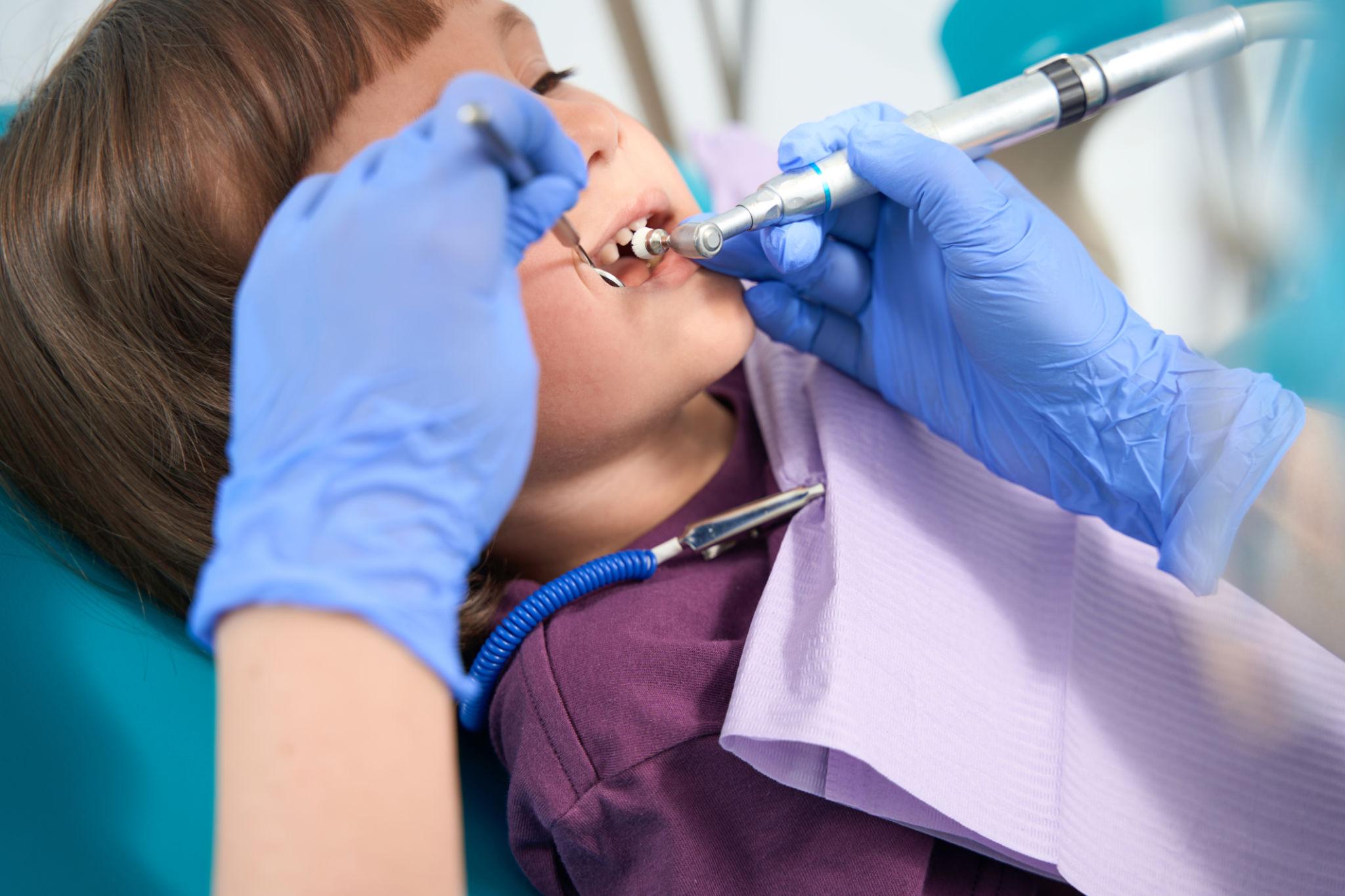
What the exam is actually looking for
Not just cavities. In a few minutes we’re checking:
- Early demineralization — the chalky white lines along the gumline that precede a cavity. Caught here, fluoride and a few habit changes can often reverse it. No drilling.
- Between the teeth, where a mirror can’t reach and only an X-ray tells the truth.
- The bite. Crossbites, deep bites, and open bites are far easier to intercept while the jaw is still growing. Catching one at seven is a different conversation than catching it at fourteen.
- Eruption order and timing. Teeth arriving badly out of sequence, or an adult tooth coming in behind a baby tooth that hasn’t loosened, are things we want to see early.
- Wear patterns. Flattened tips point to grinding. Enamel erosion on the inside surfaces can point to reflux or a heavy sports drink habit.
- Soft tissue — gums, tongue, cheeks, palate, and the tonsil area, which occasionally turns up something worth a conversation with your pediatrician.
- Mouth breathing and its effects on how the upper jaw is developing.
A visit where we find nothing isn’t a wasted visit. It’s confirmation that nothing needs intervening on yet, plus one more data point in a picture we’re building over years. Knowing what your child’s mouth looked like six months ago is what makes a change obvious now.
What the appointment looks like at each age
One to three. Short and mostly reassurance. Often on your lap. A quick polish, fluoride varnish, and a conversation with you about the stage they’re in. Our first visit and infant care page covers this age in depth.
Three to six. Usually in the chair alone now, and this is where kids learn what a dental visit is. We move slowly, name everything before using it, and let them hold the mirror. This is also when sealants come up, because the six-year molars arrive at the back — behind the baby teeth, with nothing falling out to announce them. Plenty of parents don’t know they’re there.
Seven to eleven. The messy years. Baby teeth and adult teeth at the same time, crowding becoming visible, and the first real read on whether orthodontics is likely. Hygiene tends to slip here as kids take over their own brushing before they’re quite good at it.
Twelve and up. Twelve-year molars need sealing. Wisdom teeth start showing on X-rays. Habits change — energy drinks, vaping, sports mouthguards, orthodontic hygiene. Our teen dentistry page goes into these years.
The cleaning, and why brushing at home isn’t the same thing
Plaque that isn’t removed hardens into calculus within a couple of days, and once it’s hardened, a toothbrush does nothing to it. It has to be scaled off. Parents are often surprised that kids get calculus at all — it turns up most often on the inside of the lower front teeth, right where a salivary duct empties, and it’s common even in children who brush conscientiously.
Then polishing, flossing between every contact, and usually fluoride varnish.
One practical note on the varnish: it stays slightly tacky for a few hours on purpose, because contact time is how it works. Skip brushing that night, and stick to soft, cool food for the rest of the day. Crunchy or hot food scrubs it off early.
X-rays: how we decide
This is where parents want a straight answer, so here it is. We don’t take X-rays at every visit, and we don’t take them on a fixed calendar.
The trigger is whether there’s something we can’t answer by looking. The main one is the surfaces between teeth. Once a child’s back teeth are touching, those contact surfaces are invisible to the eye, and a cavity can be well underway there while everything looks perfect from the front. If your child’s teeth still have gaps between them, we can see what we need to and there’s no reason to image.
Frequency follows risk. A child with no cavity history and spaced teeth may go a long stretch without X-rays. A child with two fillings in the past year needs them more often, because the same conditions that produced those are still in play. A panoramic image comes up around the mixed-dentition years to check on developing teeth and, later, wisdom teeth.
Everything is digital, which uses a fraction of the radiation of the film your generation grew up with, and we use a lead apron with a thyroid collar every time. If we recommend an X-ray, ask us what specific question we’re trying to answer. There should always be one.
How often should your child come in?
Six months for most kids — not because there’s anything magic about the interval, but because it’s short enough that a problem starting right after one visit is still small at the next.
Some children genuinely do better on a three or four month schedule: anyone with a recent cavity, kids in braces, children with heavy plaque or gingivitis, children taking medications that dry the mouth, and children with medical or developmental conditions that raise risk. That’s covered on our special healthcare needs page.
If we recommend a shorter interval, it’s a risk assessment, not an upsell. Ask us why and we’ll show you what we’re seeing.
Scheduling around a Wake County school year
A practical point, since it affects whether checkups actually happen.
Families on a traditional calendar tend to pile onto late July and August, which is the tightest booking window of the year here. If you want a convenient slot before school starts, call in the spring, not in July.
Families on a WCPSS year-round calendar have a real advantage worth using: tracked-out weeks fall in quieter parts of our schedule, so appointments are easier to get and your child doesn’t miss class. Line up both siblings during the same track-out and you’re done in one trip.
Either way, our hours are Monday through Thursday, 8:00 AM to 3:00 PM, with select Fridays by availability — so the earliest morning slots are the ones that cost the least school time.
What we can’t do from our end
Two cleanings a year is roughly ninety minutes of professional care against about seven hundred and thirty brushings at home. We are not the main event.
What actually moves the needle between visits is unglamorous: brushing twice daily with fluoride toothpaste, flossing anywhere two teeth touch, water instead of juice and sports drinks, and limiting how often sugar shows up rather than just how much — frequency does more damage than quantity. A fresh toothbrush every three or four months, sooner once the bristles splay.
Bring us the parts that aren’t working. A kid who fights brushing, a teen who won’t floss, a preschooler living on fruit snacks — those are ordinary problems and we have practical answers for them. We can’t help with what we don’t hear about.
Book a visit at Dino Kids Dental of Raleigh
If it’s been more than six months, or you’ve moved and haven’t found a new office yet, this is the easy appointment to make — the one where we’re looking for problems small enough that finding them is good news. Our office is on Tin Roof Way in North/Northeast Raleigh, off Louisburg Road just inside I-540 near Triangle Town Center, and families come to us from North Raleigh, Northeast Raleigh, Wake Forest, Rolesville, Knightdale, and Wendell.
Dino Kids Dental of Raleigh
5321 Tin Roof Way, Suite 101
Raleigh, NC 27616
Phone: (919) 341-2257
Email: raleigh@dksmiles.com
Hours: Monday–Thursday, 8:00 AM to 3:00 PM. Select Fridays by availability.
Related pages
- Kids’ Dental Exams & Cleanings
- Dental Sealants
- First Visit & Infant Dental Care
- Tooth-Colored Fillings
- Habit Counseling
- Dental Care for Teens
Frequently Asked Questions
How often should my child have a checkup and cleaning?
Every six months for most children. A three- or four-month interval is better for kids with a recent cavity, braces, heavy plaque or gingivitis, medications that dry the mouth, or medical conditions that raise decay risk.
What does the dentist check during the exam?
Early demineralization before it becomes a cavity, surfaces between teeth, bite development, eruption order and timing, wear from grinding, enamel erosion, gum and soft tissue health, and signs of mouth breathing. The exam is where most of the value in the visit sits.
Is a cleaning still necessary if my child brushes well?
Yes. Plaque hardens into calculus within a couple of days, and once hardened a toothbrush can’t remove it — it has to be scaled off. Kids get it most often on the inside of the lower front teeth, even with conscientious brushing.
How often do children need dental X-rays?
Only when there’s a question we can’t answer by looking, most commonly the surfaces between touching back teeth. Frequency follows risk: a child with spaced teeth and no cavity history may go a long stretch without any, while a child with recent fillings needs them more often.
Are dental X-rays safe for kids?
Digital X-rays use a small fraction of the radiation of older film, and we use a lead apron with a thyroid collar every time. If an X-ray is recommended, ask what specific question it’s meant to answer — there should always be one.
What is fluoride varnish and what happens after it?
It’s a concentrated fluoride coating painted on the teeth to strengthen enamel and help reverse early decay. It stays slightly tacky for a few hours on purpose, since contact time is how it works, so skip brushing that night and stick to soft, cool foods for the rest of the day.
When should my child get sealants?
Shortly after the permanent molars erupt — the six-year molars around age six and the twelve-year molars around age twelve. They fill the deep grooves where most childhood cavities begin, and placement involves no drilling and no numbing.
When is the easiest time of year to book?
Not late July or August, which is our tightest window as traditional-calendar families schedule before school starts. Call in spring for those. Year-round calendar families have an advantage — tracked-out weeks fall in quieter parts of our schedule and mean no missed class.
My child has never had a cavity. Do we still need to come in twice a year?
Yes. The exam is doing more than cavity detection — it’s tracking bite development, eruption timing, and wear over years. Knowing what your child’s mouth looked like six months ago is what makes a change obvious now.
